


1. Use Active Recall
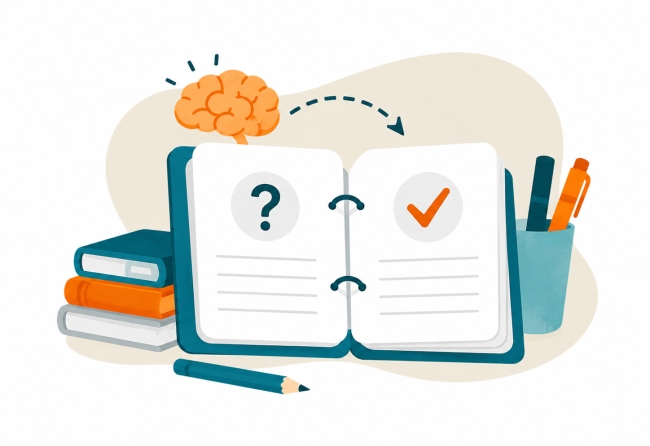
Active recall is a simple idea: try to remember the information before looking at the answer. After studying a topic, close your textbook or notes and ask yourself:
- What are the main ideas?
- Which key terms can I remember?
- Can I explain the topic without checking my notes?
- Which parts am I still unsure about?
You can also turn textbook headings into questions. For example, instead of repeatedly reading:
Causes of the Industrial Revolution
turn it into a question:
What caused the Industrial Revolution?
Then try to answer it from memory.
This forces your brain to retrieve the information rather than simply recognize it on the page. It also quickly shows you what you know and what you still need to review. Flashcards, self-made questions, and short quizzes all work well for active recall.
2. Use Spaced Repetition and the Forgetting Curve
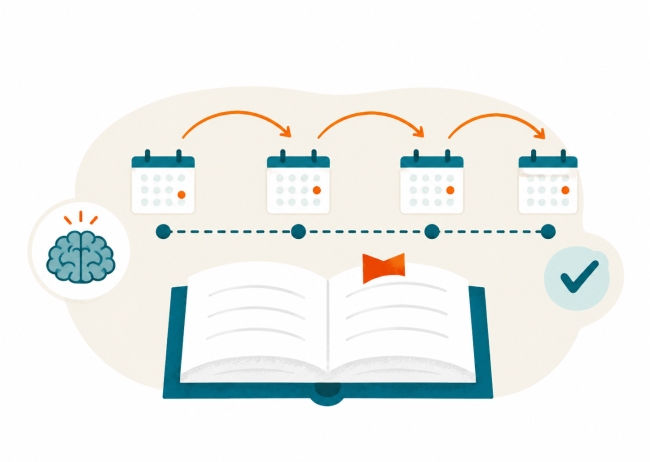
It is normal to forget some of what you learn over time. This is often explained by the forgetting curve.
If you study something once and never return to it, the details can gradually become harder to remember. Spaced repetition helps by bringing the information back at different intervals.
Instead of reviewing the same chapter five times in one evening, you might spread your reviews across several days or weeks.
A simple schedule could look like this:
| Review | When |
| First review | Same day |
| Second review | 1 day later |
| Third review | 3 days later |
| Fourth review | 1 week later |
| Fifth review | 2 weeks later |
You do not need to follow these intervals exactly.
If a topic feels difficult, review it sooner. If you already remember it well, you can leave a longer gap before the next review. Spaced repetition works even better when combined with active recall. Before opening your notes, spend a minute trying to remember the main points yourself.
This study technique is especially useful for:
- Vocabulary
- Formulas
- Definitions
- Historical dates
- Scientific concepts
- Anything you need to remember for an exam
3. Study in Short, Focused Sessions
Studying for three or four hours without a proper break can make it difficult to stay focused. For many students, shorter study sessions are easier to manage. One popular option is the Pomodoro Technique:
25 minutes of study + 5 minutes of rest
But you do not have to follow that exact timing. You can adjust it to match your concentration level.
For example:
- 30 minutes study + 5 minutes break
- 45 minutes study + 10 minutes break
- 50 minutes study + 10 minutes break
More importantly, give each session one clear goal. Instead of saying: I need to study biology.
try: I will review photosynthesis and complete 10 practice questions.
A specific task gives you a clear finish line and makes it easier to see whether you actually made progress.
4. Practice With Questions
Practice questions are one of the best study techniques for exam preparation because they force you to use what you have learned.
Try working with:
- Past exam papers
- Textbook exercises
- Online quizzes
- Flashcards
- Practice problems
- Questions you create yourself
Do not worry if you get questions wrong. Those mistakes are useful. Instead of checking the correct answer and moving on, ask yourself what went wrong.
- Did you forget a definition?
- Did you misunderstand the question?
- Did you use the wrong formula?
- Did you skip an important step?
Once you understand the reason behind the mistake, you know exactly what to work on next.
5. Explain What You Learn
Another simple way to test your understanding is to explain the topic in your own words. Imagine that a classmate has asked you to teach them what you just studied.
Try to explain:
- What the topic is about
- Why it matters
- How it works
- A simple example
If your explanation becomes confusing or you keep checking your notes, that is a sign that you probably need to review the topic again.
This method is especially useful for subjects such as science, history, economics, psychology, and other subjects where understanding ideas matters more than memorizing isolated facts.
6. Take Notes You Can Actually Review
Good notes do not need to include every sentence from a textbook or lecture. Their job is to make important information easier to find and review later.
Focus on writing down:
- Main ideas
- Important definitions
- Key examples
- Formulas
- Questions
- Difficult points
Use headings and bullet points to keep the page easy to scan.
For example:
Photosynthesis
- Uses light energy
- Requires water and carbon dioxide
- Produces glucose
- Releases oxygen
Notes like these are much easier to review than a full page of copied text. You can also turn each point into an active recall question later.
7. Create a Simple Study Schedule
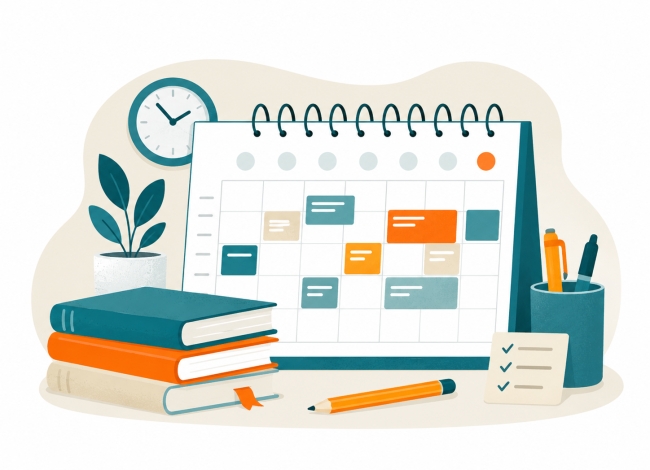
A study plan can help you avoid trying to learn everything the night before an exam.
Start by looking at:
- Exam dates
- Assignment deadlines
- Difficult subjects
- Topics that need more review
Then break large tasks into smaller ones.
Instead of writing:
Study math
write:
Complete 15 algebra questions and review mistakes.
A simple weekly study schedule might look like this:
| Day | Study Plan |
| Monday | Biology review + math practice |
| Tuesday | History notes + flashcards |
| Wednesday | Chemistry questions |
| Thursday | Math practice test |
| Friday | Review mistakes |
| Saturday | Exam practice |
| Sunday | Light review and planning |
Keep the schedule realistic.
A simple plan that you can follow consistently is usually better than an ambitious schedule that you give up after two days.
8. Remove Distractions Before You Start
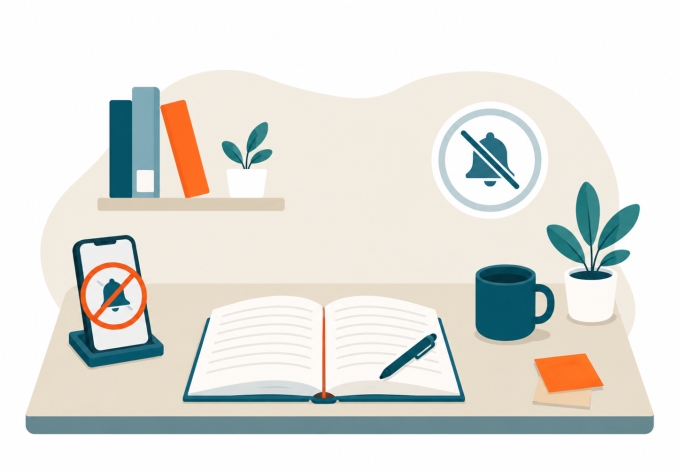
Even good study methods are hard to use when you are checking your phone every few minutes.
Before a study session:
- Put your phone away.
- Turn off unnecessary notifications.
- Close social media.
- Close unrelated browser tabs.
- Prepare your books and notes.
- Choose a quiet place if possible.
- Decide what you want to finish.
It can also help to use the same short routine each time you study:
Prepare desk → Set goal → Start timer → Study
The fewer decisions you have to make before starting, the easier it can be to get into study mode.
9. Review Your Mistakes
Students often spend too much time reviewing material they already know.
Your mistakes usually tell you more about what you should study next.
You can keep a simple mistake log:
| Topic | Mistake | What to Review |
| Algebra | Used the wrong formula | Quadratic formula |
| Biology | Forgot a definition | Mitosis |
| History | Mixed up dates | Timeline |
Before an exam, review this list again.
You will spend more time on weak areas instead of repeatedly going over topics you already understand.
10. Get Enough Rest

Effective studying is not only about what you do at your desk. Sleep and breaks matter too. When you are tired, it becomes harder to concentrate, solve problems, and remember new information. Staying up all night before an exam may give you more study time, but that does not always mean you will use that time well.
Whenever possible, spread your study sessions across several days. Take short breaks, get enough sleep, and give yourself time to recover.
A focused hour of studying when you are rested can be much more useful than several tired hours spent staring at the same page.
How to Study Effectively for Exams
When preparing for an exam, combine several study methods instead of relying on only one.
A simple study routine is:
- Learn the topic.
- Close your notes.
- Test yourself.
- Complete practice questions.
- Check your mistakes.
- Review difficult points.
- Test yourself again later.
For example, after studying one chapter, spend a few minutes recalling the key ideas without looking at your notes. Then complete several practice questions and review anything you answered incorrectly.
If your study materials are saved as PDFs, LightPDF can also help you prepare more efficiently. You can summarize long lecture notes or textbooks, ask questions about difficult sections, and quickly review key information without rereading the entire document.

Repeat the process a few days later to strengthen your memory.
This combination of active recall, practice questions, and regular review can make exam preparation more effective and manageable.


Leave a Comment