


At a Glance: Quick Platform Matcher
| Platform / Device | Top Pick | Best Suited For |
| Online / Browser | LightPDF | Bulk multi-file batch jobs and quick browser-based cleanups |
| Windows Desktop | PDFgear | Heavy offline workloads with zero file size caps |
| macOS Desktop | Adobe Acrobat Pro | Complex multi-column legal briefs and dense data tables |
| Cloud Native | Google Docs | Zero-install emergency conversions for text-only scans |
| Cross-Platform Enterprise | Nitro PDF Pro | High-volume corporate document archiving |
| Mobile (iOS / Android) | vFlat Scan & CamScanner | Flattening warped book pages and on-the-go snap-to-doc workflows |
1. LightPDF — Best for Online Batch Conversions
When you are staring down a dozen image-based PDFs that need to be turned into editable text right now, spinning up a heavy desktop app is overkill. LightPDF handles this directly in the browser.
What makes it stand out in daily workflows is its ability to process multiple PDF files simultaneously. Most web tools choke or charge you the moment you try a batch upload. Here, the built-in OCR engine automatically parses flat images, reconstructs paragraphs, and ports the output straight into an interactive web editor.
How to Convert Scanned PDF to Word Using LightPDF:
1. Drop your files onto the upload zone after clicking Select Files. And let the engine run its automatic OCR pass.
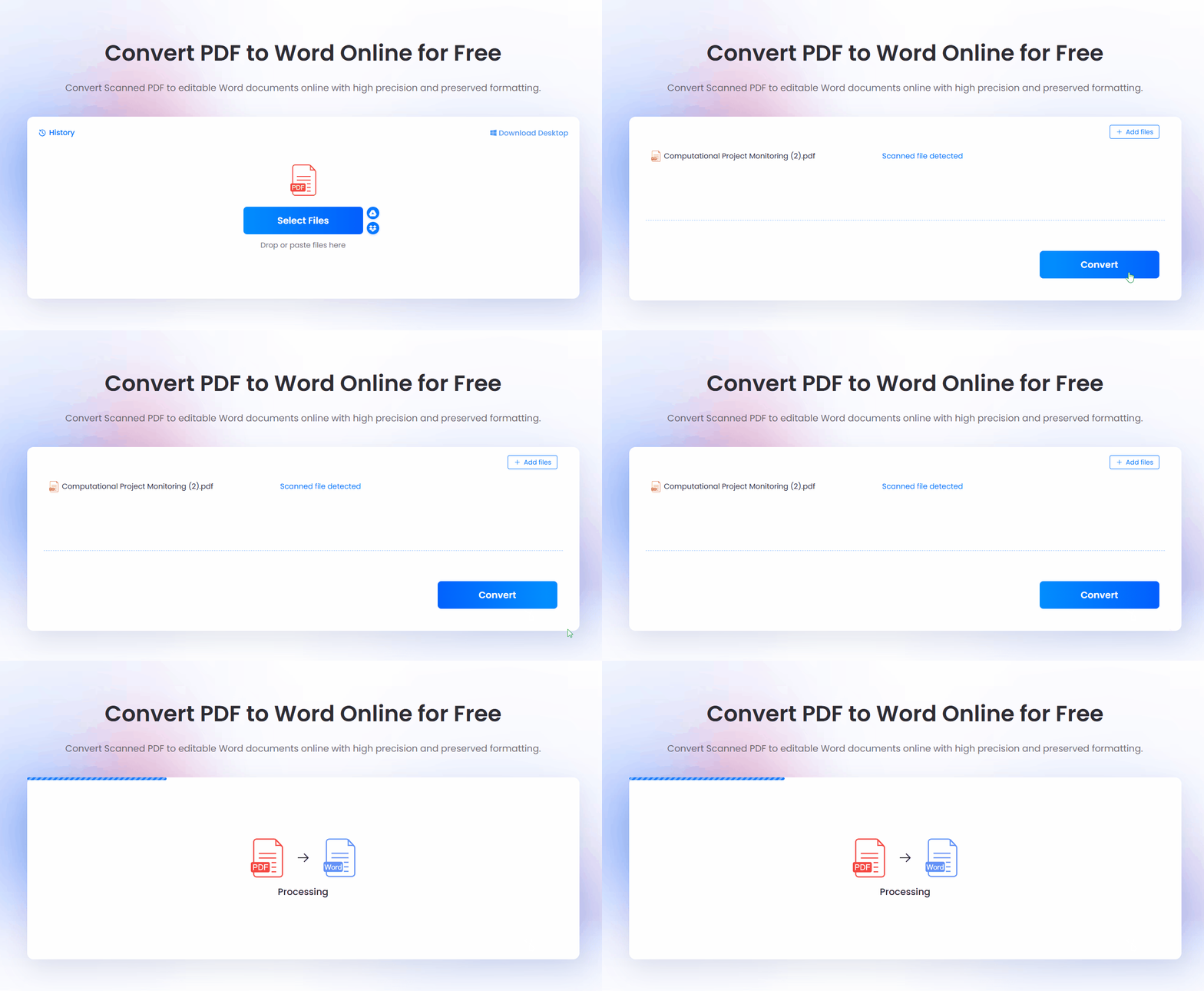
2. Instead of blindly downloading a broken file, review the text inside the browser’s live preview. You can inject missing terms, fix minor formatting slips, or add highlights on the fly.
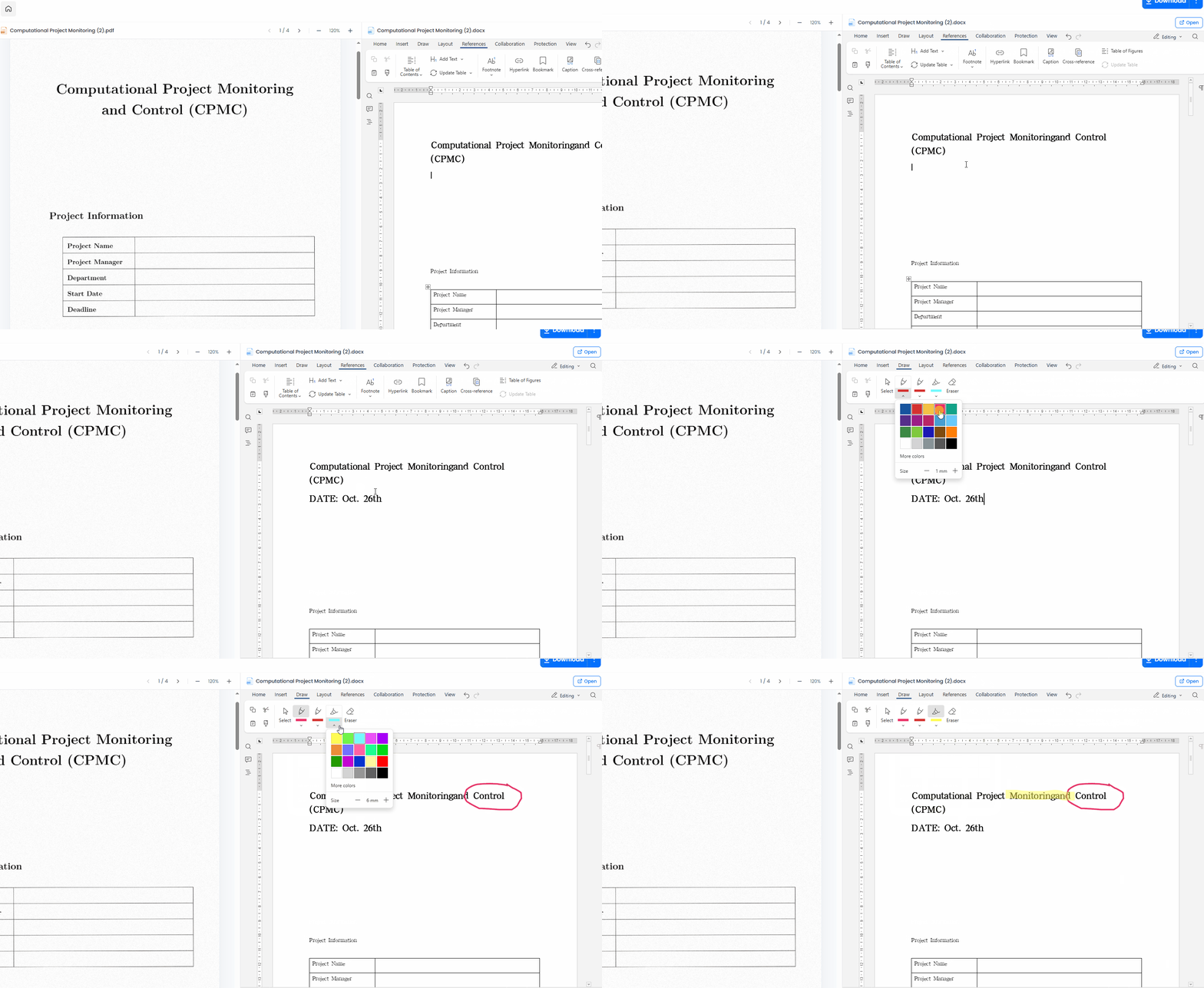
3. Hit Download in the top right to pull the finished .docx straight to your machine.
Real-world limitation: While it excels at standard multi-page reports, extremely degraded archival scans with faded typewriter ink may require manual spot-checks after export.
2. PDFgear — Best Free Offline Desktop Utility
Most free desktop PDF software hides its OCR features behind a paywall or slaps a massive watermark across your converted pages once you cross a 3-page limit. PDFgear breaks that mold.
It offers a fully featured offline desktop client for Windows and Mac that handles unlimited file sizes without charging a dime. If you handle confidential corporate records that shouldn’t touch a cloud server, running local OCR processing here is a lifesaving option.
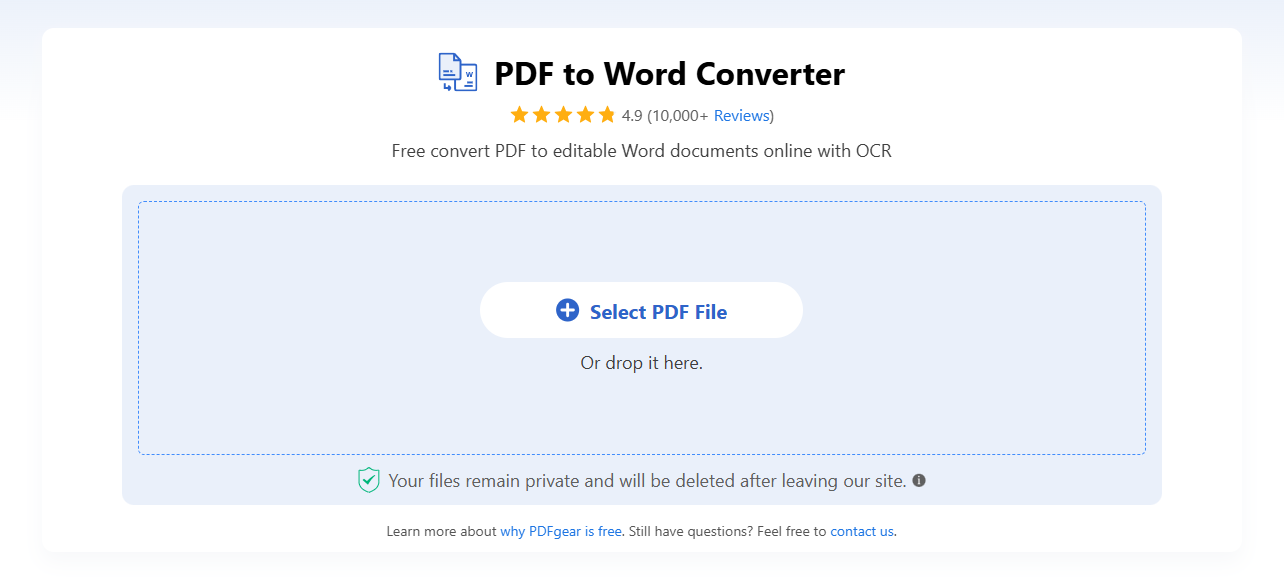
- Pros: Completely free with zero page count, file size, or conversion frequency limits; built-in advanced OCR mode parses multi-column layouts cleanly; secure local offline processing.
- Cons: Complex vector graphics can occasionally scramble line wraps; heavy batch operations on older computers rely entirely on local system hardware.
3. Google Docs — Best Zero-Install Browser Hack
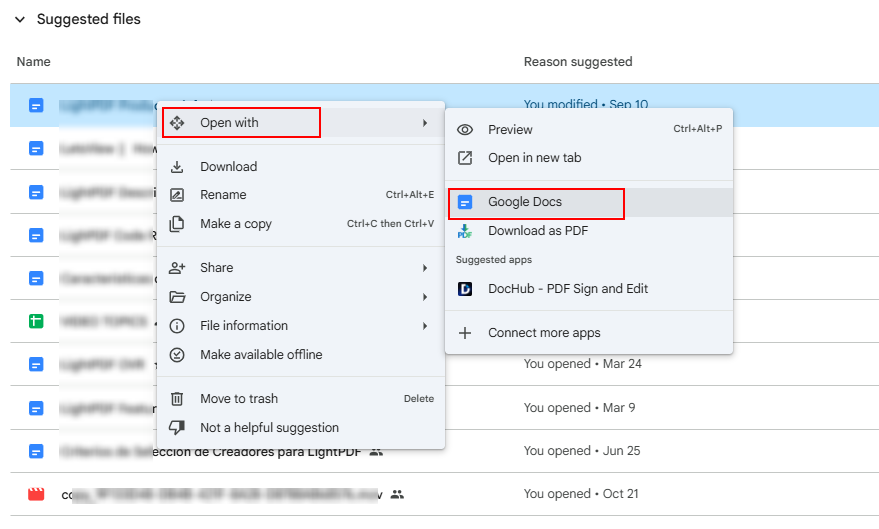
Need a quick fix on a guest computer? Open Google Drive, upload your image-based PDF, right-click it, and choose to open it with Google Docs.
Google’s native OCR engine kicks in behind the scenes, stripping away the image layer and dropping raw text into a standard document. It’s wonderfully fast for simple memos, but don’t expect miracles. Complex multi-column layouts, sidebars, and data tables get completely flattened into a single, continuous vertical stream of text.
- Pros: Completely web-based and free with any standard Google account; zero installations or browser extensions required; automatically syncs output files to your cloud storage.
- Cons: Destroys multi-column page layouts and tables, placing all parsed text into a single vertical stream; struggles heavily with low-resolution scans and custom typefaces.
4. Adobe Acrobat Pro — The Heavyweight Standard
Adobe invented the format, and Acrobat Pro remains the benchmark for heavy-duty professional publishing. If you’re converting 200-page historical scans filled with intricate footnotes, custom typefaces, and interwoven charts, Adobe’s dual-layer OCR preservation is unmatched.
- Pros: Exceptional layout retention for complex, multi-page business documents and legal filings; automatically detects and matches embedded system fonts; powerful pre-processing contrast and skew correction tools.
- Cons: Expensive monthly subscription model; interface can feel bloated and overwhelming for casual users who only need quick text extractions.
5. Nitro PDF Pro — Built for Windows Power Users
If your daily grind involves Microsoft Office suites, Nitro PDF Pro fits right into your muscle memory. The ribbon interface mimics Word and Excel, making it easy for corporate teams to adopt without training wheels. Its batch convert scanned pdf to editable word pipeline handles high volumes of invoices and receipts smoothly.
- Pros: Familiar Microsoft Office ribbon toolbar reduces the learning curve; fast batch engine processes large volumes of documents quickly; high recognition accuracy for financial data tables.
- Cons: Free version is limited to a trial period requiring a paid license for ongoing use; macOS version features differ noticeably from the Windows edition.
6. Mobile Scanners: vFlat Scan & CamScanner
When your source material is sitting on a physical desk rather than a hard drive, mobile apps fill the gap:
- vFlat Scan (iOS/iPadOS): Ideal for digitizing physical books, featuring an automatic page-flattening algorithm that removes curved shadows before running mobile OCR.
- CamScanner (Android): Great for snapping receipts or whiteboard sessions on the run, offering direct cloud integration and auto-cropping.
Getting Cleaner Conversions
Running an online ocr pdf to word tool isn’t always a one-click magic trick. Keep these field-tested tactics in mind to save cleanup time:
- Clean up low-res scans first: OCR engines are like readers—if the text is blurry, they guess wrong. If you can bump up the contrast or clean background noise before uploading, your export error rate drops drastically.
- Master Word’s Find & Replace for OCR quirks: Even top-tier engines occasionally confuse lowercase l with 1, or rn for m. Run a quick search across your final .docx file for common glitches.
- Isolate dense data tables: If your PDF contains heavy financial grids, convert those specific pages separately or export them to Excel first. Forcing a table through a standard paragraph OCR tool usually ruins the cell alignment.
FAQ
1. Why is my converted Word file still just a static image?
If you open your downloaded .docx and find you can’t highlight or click individual words, the tool you used didn’t perform OCR (Optical Character Recognition). Basic file converters only change the file extension from .pdf to .docx without scanning the underlying pixels. To fix this, make sure you choose a utility explicitly designed for scanned pdf to word workflows, such as LightPDF or PDFgear’s advanced mode.
2. How can I convert scanned PDFs to editable Word documents for free without losing my layout?
Web platforms like LightPDF provide free browser-based conversions that intelligently parse layout geometry, keeping your headers, bullet points, and margins intact. For large files without internet access, PDFgear offers a free desktop application with no page count restrictions.
3. Is it safe to upload confidential corporate documents to online converters?
Reputable online tools use high-grade TLS/SSL encryption during transfer and automatically purge uploaded files from their cloud servers within hours. However, if you are handling strictly regulated legal or medical data, it is always safer to use an offline desktop utility like PDFgear or Adobe Acrobat Pro.
4. How do I fix broken words and weird line breaks after conversion?
OCR software occasionally inserts unwanted soft returns or fuses words together across line breaks. To clean this up fast in Microsoft Word, select the messy text block, hit Ctrl + Space to clear stray formatting overrides, and apply the default Normal style.


Leave a Comment